

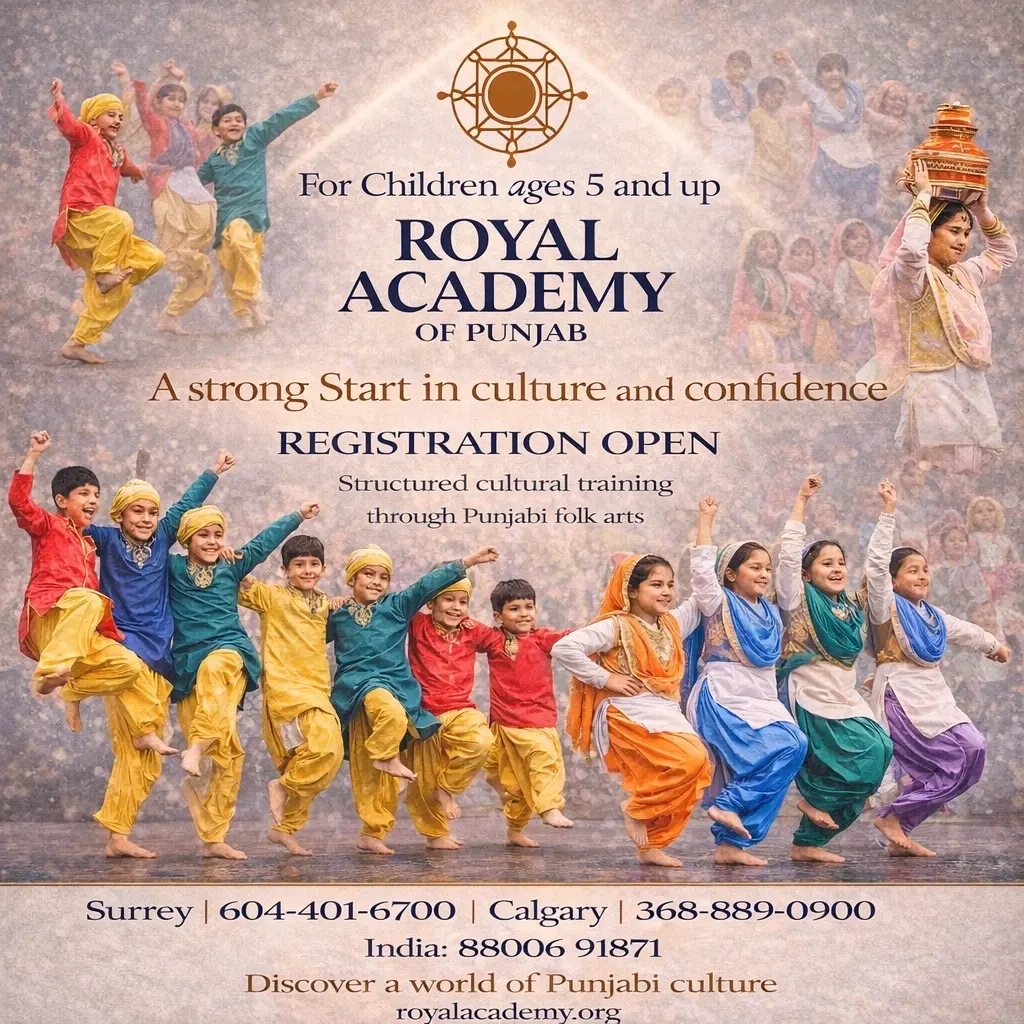


February: Love, Care, and the Responsibility of Dance
February is often described as the month of love. In the world of dance, however, love is not limited to a date on the calendar or a feeling expressed in words. It is a responsibility. It is care shown through action, structure, and long-term commitment. At its best, dance is not only an art form—it is a system of guidance, discipline, and values passed from one generation to the next.
For centuries, Punjabi folk dance has carried more than rhythm and movement. It has carried identity, resilience, joy, and community memory. These dances were never designed for shortcuts or instant results. They were built on patience, repetition, and respect for elders and teachers. That traditional foundation still defines real training today.
In a fast-paced world driven by trends and instant visibility, dance remains one of the few disciplines that demands time. You cannot rush balance. You cannot skip fundamentals. Every step, every posture, every beat requires presence. This is where care begins—not with praise, but with process.
Love in Dance Is Structured, Not Accidental
True love in dance is not emotional or performative. It is operational. It shows up in how classes are planned, how students are placed, and how progress is measured over time. It shows up when instructors correct with intention, not ego. When they protect a child’s confidence while pushing them to improve. When they understand that discipline and kindness are not opposites—they are partners.
Care in dance means recognizing that every student arrives with a different pace, background, and learning style. Some lead naturally. Some grow quietly. A responsible academy does not force sameness; it builds systems that allow each dancer to develop with dignity.
This is especially important for children and youth. Dance shapes more than physical ability. It builds posture, focus, emotional regulation, teamwork, and self-belief. When taught correctly, it becomes a foundation for life, not just the stage.
The Role of Tradition in Modern Training
Tradition is often misunderstood as resistance to change. In reality, tradition is stability. It provides standards. It reminds us why certain practices exist and why they have lasted. Punjabi folk dance has survived because it was taught with care, protected with pride, and practiced with respect.
Modern platforms may change how dance is shared, but they should never change how it is taught. Strong training still begins with basics. Respect for instructors still matters. Consistency still wins over talent alone.
February invites reflection—not only on love, but on stewardship. Who is protecting the art form? Who is ensuring that growth does not come at the cost of values? Who is building dancers that are strong on stage and grounded off it?
Community Is the Heartbeat
Dance has never been a solo journey. It lives in groups, teams, and shared energy. From rehearsals to performances, progress happens together. This collective environment teaches responsibility—to oneself and to others.
Families play a crucial role in this ecosystem. When parents trust the process and support consistency, children thrive. When academies communicate clearly and operate transparently, communities grow stronger. Care is not one-sided; it is mutual.
February is also a reminder that love is shown through presence. Showing up to class. Supporting teammates. Respecting schedules. Trusting long-term growth over short-term results. These habits build not just better dancers, but better individuals.
Looking Forward Without Losing the Past
Growth is essential. Expansion is healthy. But growth without grounding is fragile. The future of dance depends on institutions that can scale responsibly—without diluting standards or losing cultural depth.
Forward-thinking leadership understands this balance. It invests in training systems, qualified instructors, and clear pathways for students. It honors tradition while preparing dancers to carry it forward with confidence and integrity.
Care, in this sense, is strategic. It ensures sustainability. It ensures that years from now, the art form still stands strong—recognizable, respected, and rooted.
Royal Academy of Punjab: Love in Action
At Royal Academy of Punjab, love and care are not abstract ideas. They are built into daily operations, teaching methodology, and long-term vision.
The Academy follows a disciplined, time-tested approach:
teach fundamentals first, nurture confidence steadily, and uphold cultural responsibility at every level. From young beginners to advanced teams, every dancer is guided with structure, respect, and accountability.
Classes are designed to do more than prepare students for performance. They are designed to build character, consistency, and pride in Punjabi culture. Instructors lead with experience. Training is intentional. Progress is earned.
February may be a symbolic month, but the Academy’s commitment runs year-round. Love is shown in planning. Care is shown in execution. Tradition is protected through action.
A Call to Families and the Next Generation
Choosing a dance academy is not just about learning steps. It is about choosing an environment. One that values discipline over shortcuts. One that respects culture. One that understands that real growth takes time.
As we move forward, the responsibility remains clear:
to train with purpose, to teach with care, and to lead with values.
Dance will continue to evolve. Platforms will change. Trends will come and go. But the core will always remain the same—love expressed through responsibility, and care demonstrated through commitment.
This February, and every month after, let dance remain what it has always been: a bridge between generations, a space for growth, and a living expression of culture.
Discover a world of Punjabi culture.
Registrations Open
📍 Surrey | Calgary | India
📞 Surrey: 604-401-6700
📞 Calgary: 368-889-0900
📞 India: 88006-91871