

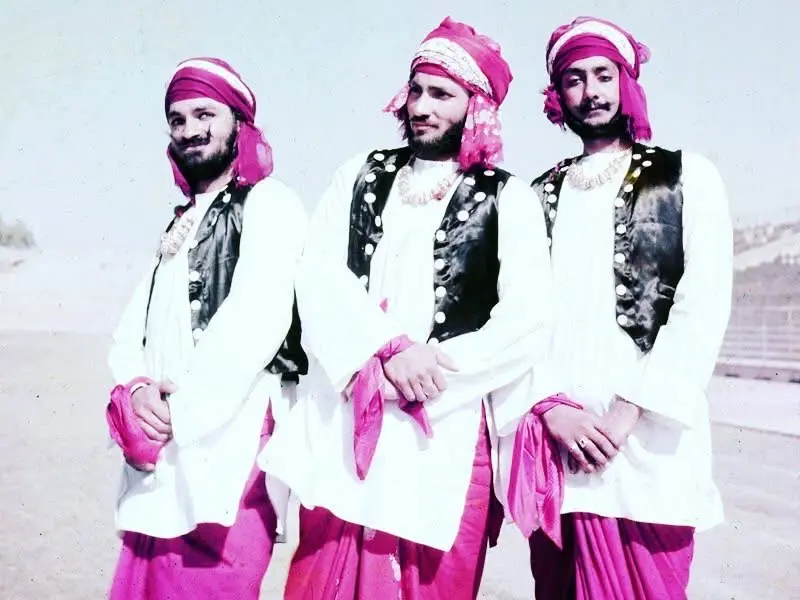


The Birth Identity of Bhangra: From Republic Day 1954 to a Global Cultural Movement
Bhangra’s journey is not the story of a single dance—it is the story of a people, a rhythm, and a cultural system that evolved with purpose. While Bhangra has always lived in the fields and villages of Punjab, its birth identity on a national platform was firmly established on India’s Republic Day in 1954. That moment changed everything.
The historic Republic Day performance—led by the Deepak Brothers with Dholi Bhana Ram ji on the dhol—gave Punjabi folk dance national legitimacy. For the first time, Bhangra was not just a regional expression; it was a symbol of cultural pride presented to the entire nation. This was the turning point where Bhangra stepped out of local tradition and into structured cultural recognition.
From National Recognition to Cultural Expansion
After 1954, Bhangra began to travel. Its powerful energy, disciplined formations, and celebratory spirit quickly resonated beyond Punjab. The dance found its way into Bollywood, where it became a visual and rhythmic marker of Punjabi identity. On screen, Bhangra was no longer background—it was central, confident, and unmistakable.
At the same time, a more important transformation was happening at the grassroots level. Bhangra was formally introduced into schools and universities across Punjab, not as an extracurricular novelty but as a structured cultural discipline. Through Youth Festivals, students were trained, evaluated, and celebrated for their mastery of folk dance. This institutional model ensured continuity, fairness, and a clear pathway for young performers.
Beyond Bhangra: Building a Complete Folk Ecosystem
A defining shift occurred when Punjabi folk culture expanded beyond a single dance form. Under the leadership and cultural supervision of Pammi Bai, other Punjabi folk dances were formally introduced and established within universities. This included Giddha, Sammi, Luddi, Jhoomer, and Mawai Giddha.
This was a critical moment in cultural history. By ensuring these dances were taught, evaluated, and respected within academic institutions, Pammi Bai ji helped transform Punjabi folk dance into a complete cultural curriculum. Each form carried its own rhythm, expression, and storytelling—together representing the full spectrum of Punjabi heritage. This institutional recognition protected authenticity while encouraging disciplined growth.
Leadership That Organized the Legacy
Cultural traditions survive when they are organized, not diluted. Pammi Bai ji’s contribution lies not only in performance but in system-building. His leadership ensured that Punjabi folk dance retained its roots while adapting to modern platforms. This vision culminated in the creation of the World Bhangra League.
The World Bhangra League introduced a professional framework that Bhangra had long needed—clear standards, structured judging, cultural accountability, and international visibility. The first-ever World Bhangra League competition, held recently in Punjab, was more than an event. It was a statement that global growth must begin at the roots, with authenticity intact.
By launching the League in Punjab, the message was unmistakable: Punjabi folk dance does not need validation from outside—it sets its own benchmarks.
Canada as the Second Home of Punjabi Folk Dance
As Bhangra and other folk forms expanded globally, Canada emerged as a central hub. With a strong Punjabi diaspora and a growing generation of Canadian-born youth, the need for authentic cultural education became essential.
The Royal Academy of Punjab played a defining role in this transformation. Through structured training, disciplined pedagogy, and cultural context, the Academy helped make Canada a global center for Punjabi folk dance. Under the supervision and guidance of Pammi Bai ji, Canadian-born youth were introduced not only to movements and rhythms, but to the history, values, and musical foundations of Punjabi culture.
This approach ensured that tradition was not performed superficially, but understood deeply. Students learned why the dance exists, what it represents, and how it connects to identity.
From Punjab to the World—With Integrity
Today, Bhangra stands independently on the global stage—from Punjab to Bollywood, Bollywood to Hollywood—supported by institutions, leagues, and academies that respect its origins. Alongside it, Giddha, Sammi, Luddi, Jhoomer, and Mawai Giddha continue to thrive as equal pillars of Punjabi folk heritage.
This journey was not accidental. It was shaped by leaders who valued tradition, built systems, and invested in youth. Pammi Bai ji’s role in establishing Punjabi folk dances within universities, launching global platforms like the World Bhangra League, and guiding institutions such as the Royal Academy of Punjab has ensured that the culture did not fragment as it expanded.
A Living Legacy
Bhangra’s appearance on Republic Day in 1954 marked its birth identity on a national stage. What followed was decades of disciplined growth—into education systems, global media, competitive platforms, and international communities. Today, Punjabi folk dance stands as a living legacy, carried forward by youth who know both the rhythm and the reason behind it.
This is the story of Bhangra done right: roots respected, systems built, and culture preserved for generations to come.